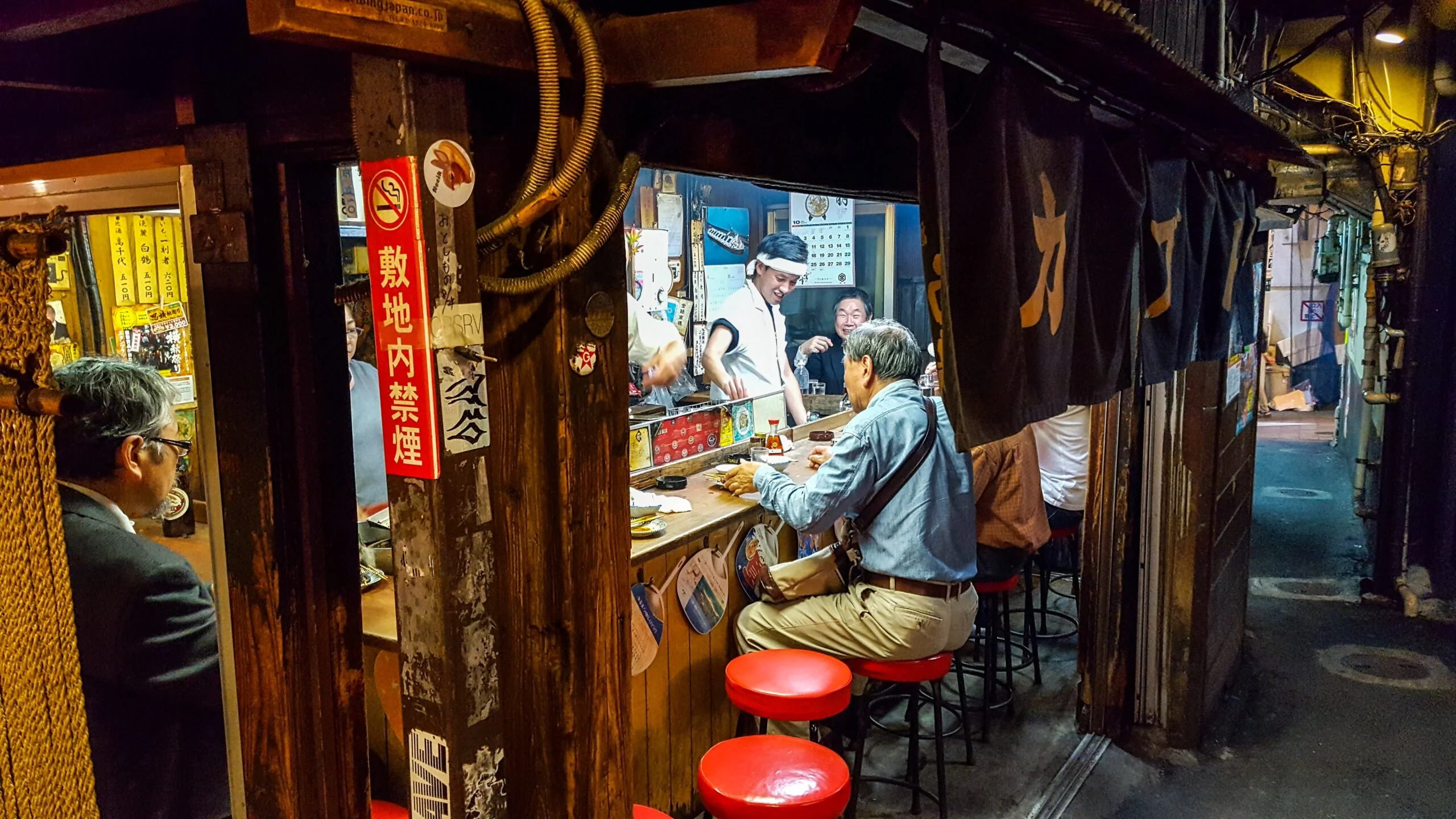
Finally, the moment had arrived: our trip to Japan. For years, Japan had been at the very top of our travel wish list, and as people who are always dreaming about our next adventure, we could not wait to experience this fascinating country for ourselves. Japan had always seemed like a destination where completely different worlds came together. It is a country where ancient traditions exist alongside cutting edge technology, where peaceful temples can be found just a short distance from enormous cities, and where food is treated with an attention to detail that is almost an art form. During our journey through Japan, we experienced all of these contrasts and discovered a country that was even more fascinating than we had imagined.
Our Japan itinerary
Our Japan itinerary took us from the enormous metropolis of Tokyo to the historic streets of Kyoto, through the peaceful landscapes of the Japanese Alps to Takayama, and finally to Nara, a city famous for its temples and free roaming deer. Travelling between these destinations by train was part of the experience itself. We used the Japan Rail Pass and regularly travelled by Shinkansen, Japan’s famous high speed train, watching the landscape change as we moved from one part of the country to another. This route allowed us to experience the many different sides of Japan, from vibrant city life and ancient traditions to peaceful mountain landscapes and unforgettable local experiences.
Tokyo: Where modern Japan meets ancient traditions
Tokyo was the perfect place to begin our journey through Japan. After years of having Japan at the very top of our travel wish list, we finally found ourselves walking through the streets of one of the largest cities in the world. We arrived with a serious case of jet lag, but that did not stop us from immediately wanting to explore everything around us. Tokyo has an incredible energy that is difficult to describe until you experience it yourself. Futuristic skyscrapers, endless neon lights, quiet temples, tiny restaurants, busy shopping streets and the constant movement of millions of people all seem to exist side by side. There is so much to see and do in Tokyo that even after five days we felt like we had only scratched the surface.
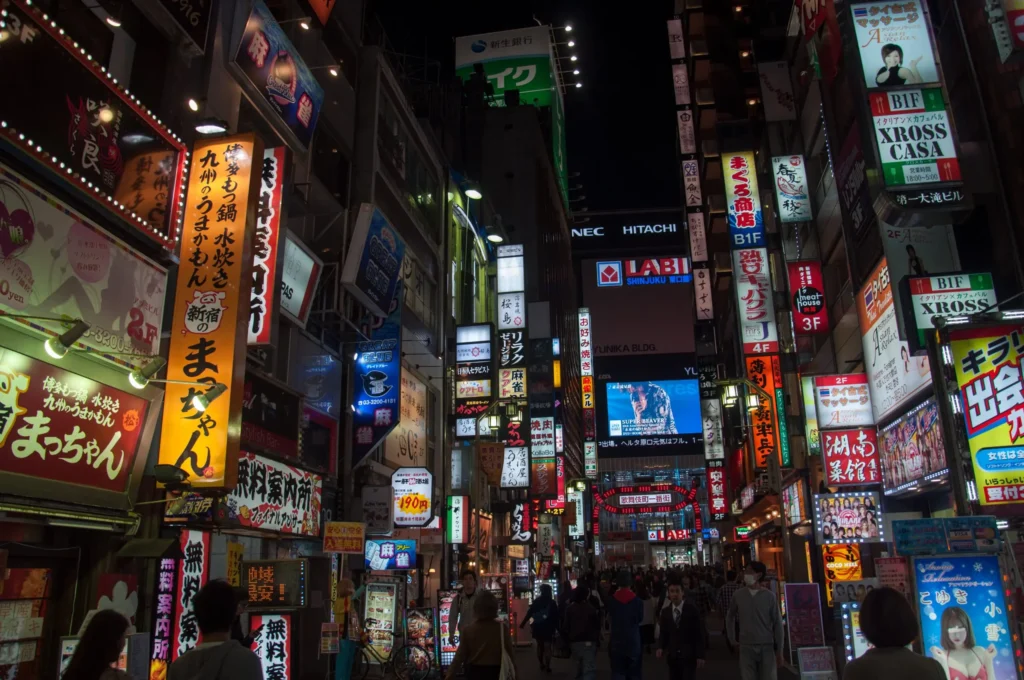
One of the places that gave us our first real taste of traditional Japan was Asakusa, home to the historic Senso ji Temple. After wandering through the busy streets of Tokyo, arriving at this temple felt like a peaceful escape from the enormous city surrounding it. From there, we travelled to the completely different atmosphere of Shibuya, where modern Tokyo takes centre stage. Of course, we had to experience the famous Shibuya Crossing and visit the statue of Hachiko, the loyal dog whose story became famous around the world. For a different perspective of the city, we headed to Tokyo Skytree, where you can look out across the enormous urban landscape. We also made time for a walk through Ueno Park, which offered a welcome break from the constant energy of the city.
What we loved most about Tokyo was the incredible contrast. You can spend the morning visiting a historic temple and the afternoon exploring the latest fashion, technology and pop culture. Whether you are interested in traditional Japanese culture, shopping, karaoke or quirky experiences such as cat cafes, Tokyo has something for everyone. It is also one of those cities where almost anything seems possible. You never quite know what you are going to discover around the next corner, and that sense of curiosity makes simply walking around Tokyo an experience in itself. We stayed at Hotel Mystays Nishi Shinjuku, a comfortable hotel in a convenient location that gave us a good base from which to explore the city.
Kyoto: Temples, gardens and traditional Japanese culture
After the energy and excitement of Tokyo, we continued our Japan journey to Kyoto by Shinkansen. The train ride itself was part of the experience, and arriving in Kyoto felt like stepping into another world. Where Tokyo is filled with enormous buildings, bright lights and constant movement, Kyoto offered us a much calmer atmosphere. The former imperial capital of Japan is filled with historic temples, beautiful gardens, traditional wooden houses and centuries of culture. After several days in Tokyo, we found the slower pace of Kyoto incredibly refreshing.
One of the highlights of our time in Kyoto was Fushimi Inari Taisha, the famous Shinto shrine known for its thousands of bright red torii gates. The gates continue up the mountain and create one of the most recognisable sights in Japan. We also visited Kinkaku ji, better known as the Golden Pavilion, which looked particularly beautiful as it reflected in the pond surrounding it. Another unforgettable experience was walking through the Arashiyama Bamboo Grove. Standing among the enormous bamboo stalks creates an almost surreal feeling, especially when you take the time to slow down and simply enjoy the surroundings.
Kyoto has many different faces, and exploring the city’s neighbourhoods was one of our favourite things to do. In Gion, we admired the traditional wooden machiya houses and were even lucky enough to catch a glimpse of a geisha. We also visited the Zen gardens of Ryoan ji, where the simplicity and tranquillity of the gardens offered a completely different experience from the busy streets of the city. Another highlight was Kiyomizu dera Temple, which sits high above Kyoto and offers beautiful views across the city. With so much history and culture around every corner, we could easily understand why Kyoto is such an important destination for anyone travelling through Japan.
We spent five days in Kyoto and still felt that there was more to discover. Accommodation in the city can be quite expensive, so it is worth comparing different options before booking. During our stay, we chose Hotel Grand Bach Kyoto. The hotel offered a good balance between price and quality, and the location was excellent for exploring the city and its many attractions.
Takayama and the Japanese Alps
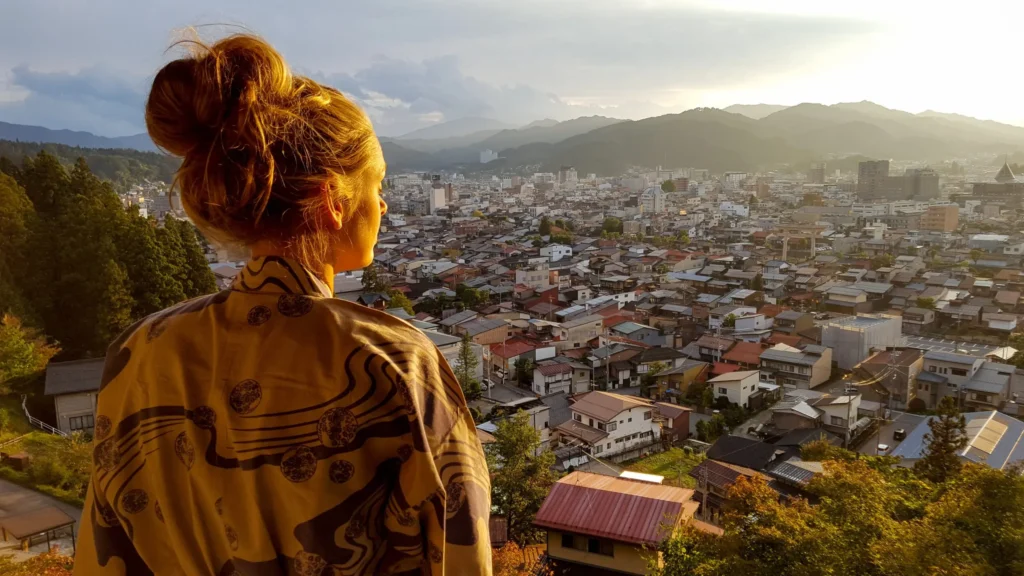
From Kyoto, we continued our journey to Takayama in the Japanese Alps, once again travelling by train with our Japan Rail Pass. After the enormous cities of Tokyo and Kyoto, arriving in Takayama felt like a completely different experience. The town is known for its traditional wooden houses and charming streets, and the surrounding mountains give the area a much more peaceful atmosphere. For us, Takayama offered a glimpse of a more rural side of Japan and allowed us to experience a slower pace of travel. We enjoyed walking through the town, exploring the surrounding area and, of course, trying some of the local specialities.
One of the experiences we would particularly recommend when travelling through this part of Japan is staying in a traditional ryokan. A ryokan is much more than simply a place to sleep. It offers an opportunity to experience traditional Japanese hospitality and to slow down for a while. As soon as you enter, the atmosphere changes. The smell of tatami mats, the soft light of paper lanterns and the peaceful surroundings create an incredible sense of calm. After a warm bath in the onsen, we changed into yukata and settled down on our futons while the cool mountain air surrounded us. For us, this was one of the most memorable experiences of the entire trip and a perfect way to experience a more traditional side of Japan.
Nara: Deer, temples and the Great Buddha
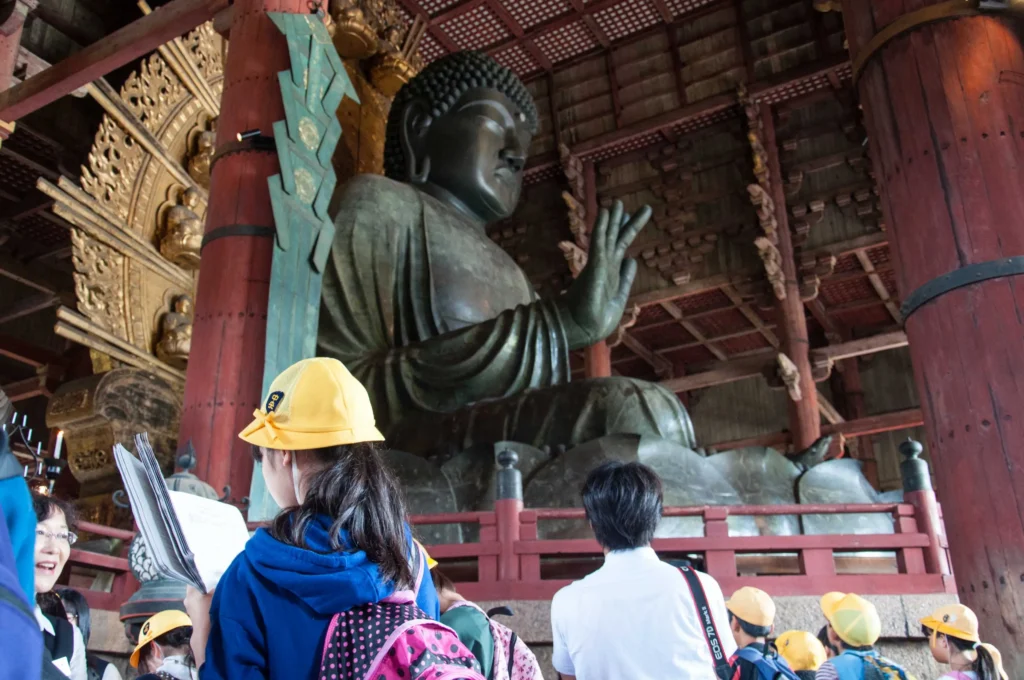
Our final stop was Nara, a city famous for its historic monuments and the deer that roam freely through Nara Park. After the huge cities we had visited earlier in our journey, Nara once again offered a completely different atmosphere. Walking through the park while deer wandered around us was such a unique experience. They are incredibly cute and quickly become part of the scenery, making it almost impossible not to stop and watch them. Nara is also home to some impressive historic sights, so there is much more to the city than the famous deer.
One of the places we definitely recommend visiting is Todai ji Temple, home to the enormous Great Buddha. The size of the Buddha and the temple itself is incredibly impressive, and visiting the temple gave us another opportunity to experience the connection between Japanese history, religion and architecture. Nara was a fitting final destination for our journey because it brought together many of the things we had experienced throughout Japan, from traditional culture and religion to beautiful surroundings and a slower pace of life.
The unique culture of Japan
People often ask us which is the most beautiful country we have ever visited, but that is not an easy question to answer. Every country has its own character, and there are always different aspects that influence how we experience a destination. Culture is one of those aspects that matters greatly to us when travelling, and if we look specifically at culture, Japan made an incredibly strong impression on us. You can read about Japanese culture, watch documentaries and look at photographs, but we believe that you only truly begin to understand it when you experience it yourself.
What makes Japan particularly fascinating is that culture is not something you only encounter inside museums or historic buildings. It is present in everyday life, in the way people interact with each other, in the way food is prepared and presented, in the way people behave on public transport and in the way traditional and modern life exist alongside each other. During our journey, we experienced many small moments that made us realise just how different everyday life in Japan could feel compared with what we were used to.
Japanese politeness and respect
One of the first things we noticed after arriving in Japan was the incredible level of politeness. At the airport, we were surrounded by people and signs that we did not always understand, and because we were tired and unfamiliar with our surroundings, finding our way was not particularly easy. In the middle of all the activity, we asked a Japanese man for directions. We expected a quick answer, but instead he immediately took the time to help us. He carefully explained the route we needed to follow and even gave us some information leaflets. Once he was sure we understood, he disappeared back into the crowd and continued with his own day. We were left standing there slightly amazed by how much time and effort he had taken to help complete strangers.
We experienced another example of this when waiting for a train. The train arrived exactly on time, and although there were plenty of people waiting, there was no pushing or rushing to get on board. Instead, everyone calmly formed a line and waited for the passengers to leave the train before boarding one by one. It was a small moment, but it stayed with us because it showed how respect and consideration can become such a natural part of everyday behaviour. These moments were not spectacular tourist experiences, but they were precisely the kind of experiences that made travelling through Japan so interesting to us.
The art of Japanese food
Food is another important part of the Japanese travel experience. Before visiting Japan, we were already familiar with sushi, tempura and ramen, but travelling through the country showed us that Japanese cuisine is so much more diverse than these internationally famous dishes. Seasonal ingredients, balance and presentation all play an important role, and we were fascinated by the amount of attention given not only to the taste of a dish but also to the way it is prepared and presented. Meals are often served in smaller portions, with each dish carefully arranged, and even the plates and bowls become part of the overall experience.
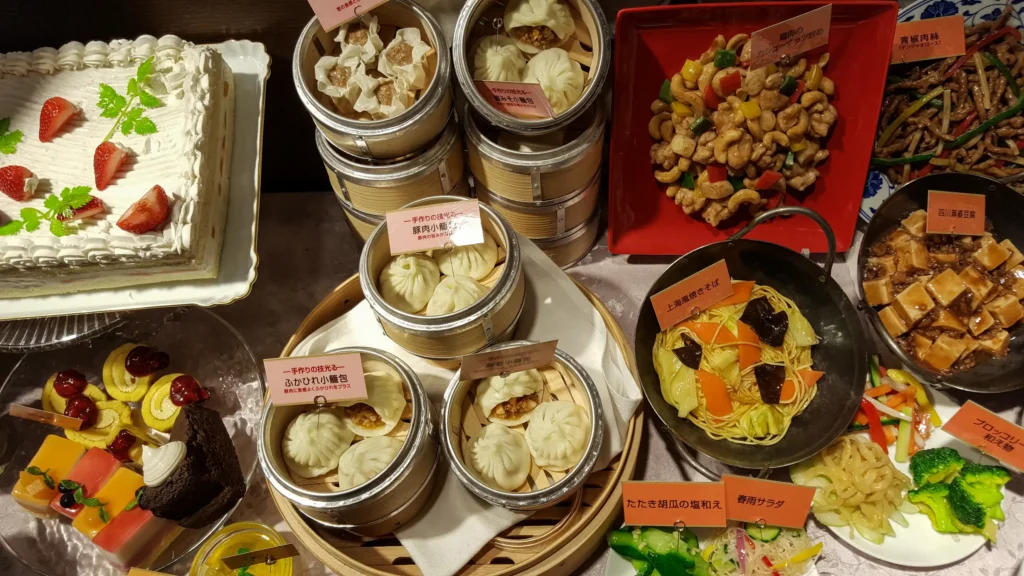
We also enjoyed eating in some of the many Japanese food courts. One thing that immediately caught our attention was the incredibly realistic plastic food used to show what is available. Instead of looking at a traditional menu and trying to guess what a dish might look like, you can often see an almost identical model of the actual meal. It may sound like a small detail, but it was one of those things that made the Japanese food experience feel so different from what we were used to.
A traditional Japanese tea ceremony offers another fascinating insight into Japanese culture. Guests are welcomed into a peaceful room where every movement and gesture has meaning. The host, dressed in a kimono, prepares the tea with calm and precise movements, carefully cleaning the utensils, whisking the tea and presenting the bowl. Nothing feels rushed. Every action is deliberate and connected to ideas of respect, purity and simplicity. For us, the ceremony was about much more than drinking tea. It was a moment of tranquillity and a wonderful example of how deeply cultural traditions can influence an everyday activity.
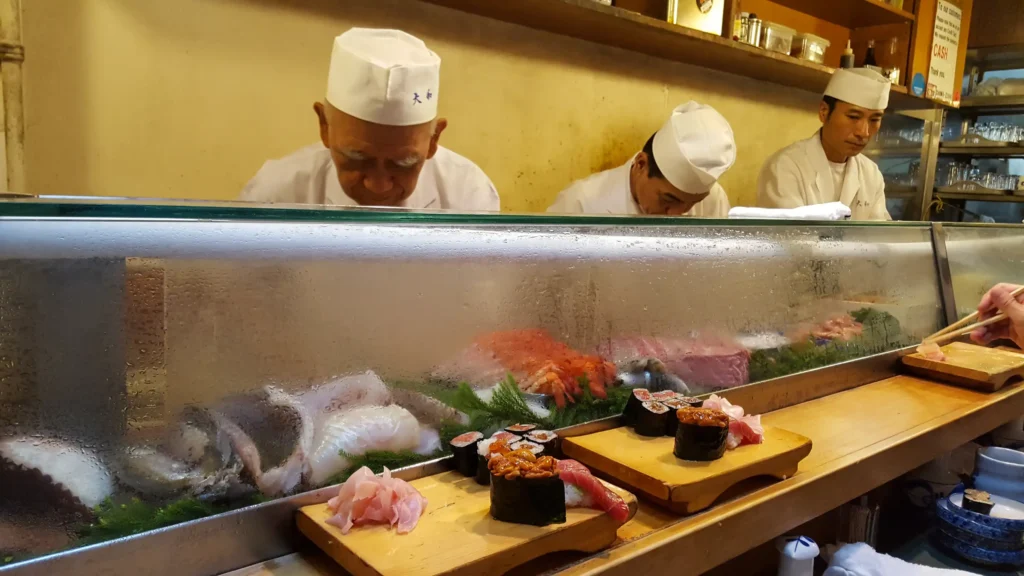
And then there is sushi. We have one important tip if you love sushi: try it in Tokyo. We ate sushi in one of the small restaurants around the harbour and tasted some of the freshest sushi we have ever experienced. It was so good that it almost ruined sushi for us back home. Every time we went to a sushi restaurant after returning from Japan, we found ourselves thinking about the sushi we had eaten in Tokyo.
Shinto and Buddhism in Japan
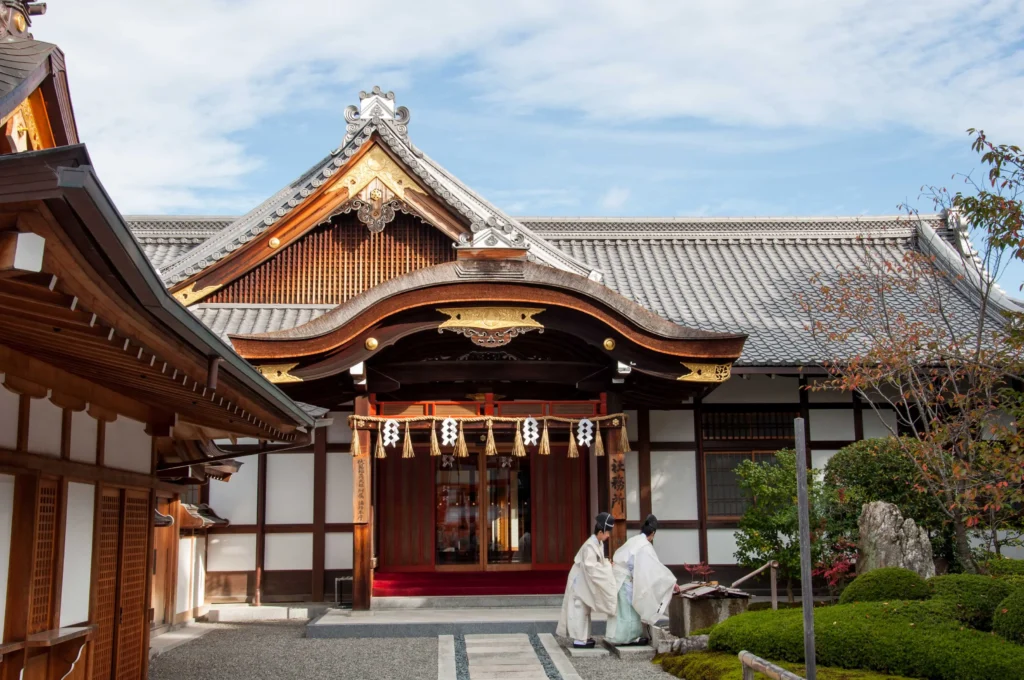
Religion is another important part of Japanese culture, although it is often woven into everyday life in subtle ways. Japanese culture contains elements of both Shinto and Buddhism, and we encountered this influence throughout our journey. Shinto is Japan’s indigenous religion and places great importance on nature and the kami, spiritual beings associated with elements of the natural world such as mountains, rivers, trees and stones. This connection with nature can be seen in the many Shinto shrines found throughout the country, where people come to pray for protection, good fortune and wellbeing or to honour their ancestors.
Buddhism has also had a major influence on Japanese art, architecture and philosophy. Buddhist temples are not simply places of worship. They can also be places for reflection, meditation and cultural traditions. During our journey, we visited several temples and shrines, and these experiences helped us appreciate how closely religion, history, architecture and everyday life can be connected in Japan. The respect shown towards nature, ancestors and spiritual traditions is an important part of what makes Japanese culture so distinctive.
The balance between old and new
Perhaps one of the most fascinating aspects of travelling through Japan is the way traditional and modern culture exist alongside each other. In cities such as Tokyo and Kyoto, futuristic skyscrapers and advanced technology can be found only a short distance from ancient temples, traditional wooden houses and quiet tea houses. Young people embrace modern fashion, technology and popular culture, while traditional rituals and customs continue to play an important role. Rather than feeling like two completely separate worlds, the old and the new seem to exist together as part of everyday Japanese life.
This contrast was something we noticed throughout our journey. One moment you can be standing in front of a centuries old temple, surrounded by history and tradition, and the next you can find yourself in a modern shopping district filled with technology, fashion and bright lights. For us, this combination is one of the things that makes Japan such a fascinating destination. The country has managed to preserve many aspects of its past while continuing to embrace innovation and change.
Japan’s colourful and eccentric pop culture
Japanese pop culture is another side of the country that has become famous around the world. J pop, anime, manga, fashion, karaoke and technology have all become part of Japan’s global cultural influence. During our time in Japan, we saw how strongly this culture is connected to everyday life, particularly in the major cities. Tokyo in particular is filled with colourful shops, themed experiences and references to modern Japanese entertainment and fashion.
What makes Japanese pop culture so interesting is the way it reflects the creativity and individuality of modern Japan. It is constantly changing and evolving, while still existing alongside the country’s traditional culture. For us, this was another example of the fascinating contrast we experienced throughout the trip. Japan can be deeply traditional and incredibly modern at the same time.

Why we loved travelling through Japan
Japan exceeded all our expectations. Before our trip, we knew that we were travelling to a country that would be very different from what we were used to, but we did not fully understand just how fascinating that difference would be. Every destination on our itinerary offered something completely unique. Tokyo introduced us to the energy and innovation of modern Japan, while Kyoto allowed us to immerse ourselves in history, temples and traditional culture. Takayama showed us a quieter side of the country in the Japanese Alps, and Nara gave us the opportunity to walk among free roaming deer while discovering some of Japan’s most impressive historic monuments.
Travelling through Japan by train also made the journey itself part of the adventure. The Japan Rail Pass allowed us to move between destinations with ease, and the Shinkansen was an experience we will never forget. Of course, our trip only gave us a glimpse of everything Japan has to offer, but that is also what makes us want to return. Japan is one of those destinations that stays with you long after you have come home. The combination of culture, food, history, nature, modern cities and the many small experiences you encounter along the way makes it a country that is difficult to compare with anywhere else we have travelled.
Frequently Asked Questions About Travelling to Japan
What is the best time to visit Japan?
We visited Japan in October and found it to be a wonderful time to travel. Spring, particularly from March to May, is a popular period because of the cherry blossoms, while autumn, from September to November, offers beautiful autumn colours and generally comfortable temperatures. The best time for your own Japan trip will depend on what you want to experience, but both spring and autumn can be beautiful seasons for exploring the country.
Do I need a visa to travel to Japan?
Visa requirements depend on your nationality and the purpose and length of your trip. For many travellers from Western countries, including the Netherlands and Belgium, tourist visits of up to 90 days can be made without a visa. However, entry requirements can change, so it is always important to check the latest requirements that apply to your nationality before travelling.
What is the best way to travel around Japan?
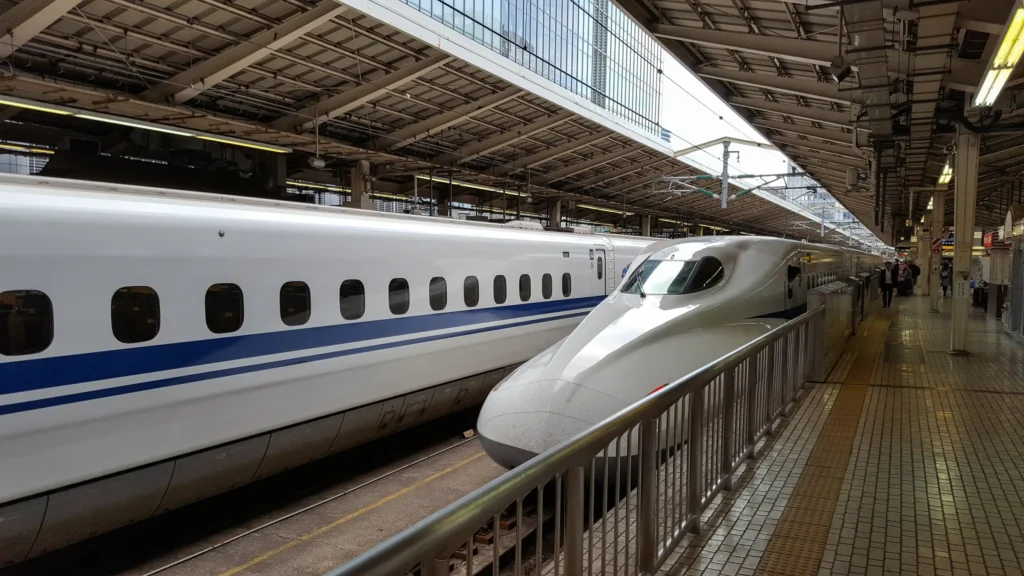
For travelling between major cities, the train is one of the most convenient options. The Shinkansen makes travelling between destinations such as Tokyo and Kyoto fast and comfortable, while the wider Japanese rail network gives you access to many other parts of the country. We travelled with the Japan Rail Pass during our trip, which made moving between destinations particularly easy. Whether a rail pass is the right choice for your own itinerary depends on your route and travel plans, so it is worth comparing the options before your trip.
How much does a trip to Japan cost?
The cost of a trip to Japan depends on your travel style, accommodation choices, transport and the activities you want to do. During our journey, we noticed that accommodation prices could vary considerably, particularly in popular cities such as Kyoto. It is therefore worth comparing hotels and planning your budget before you leave. Food and transport can also vary depending on the choices you make, so there is no single budget that will apply to every traveller.
Is it difficult to travel through Japan without speaking Japanese?
Although Japanese is the main language, we found that it is possible to travel through Japan without speaking Japanese. In larger cities and popular tourist destinations, you will encounter English signs and information, and a translation app can be very useful when you need help. Learning a few basic Japanese phrases before your trip is also a good idea. Even when communication is difficult, we found people willing to help, which made travelling through the country much easier than we had expected.
What are the must see places in Japan?
There are countless places worth visiting in Japan, but our own itinerary included several destinations that left a lasting impression on us. In Tokyo, we recommend experiencing Shibuya Crossing, visiting Senso ji Temple in Asakusa and seeing the city from Tokyo Skytree. In Kyoto, highlights include Fushimi Inari Taisha, Kinkaku ji, the Arashiyama Bamboo Grove, Gion, Ryoan ji and Kiyomizu dera Temple. Takayama is a wonderful destination for experiencing the Japanese Alps and traditional Japan, while Nara is known for Nara Park, its free roaming deer and Todai ji Temple with its enormous Great Buddha.
What Japanese etiquette should I know before visiting?
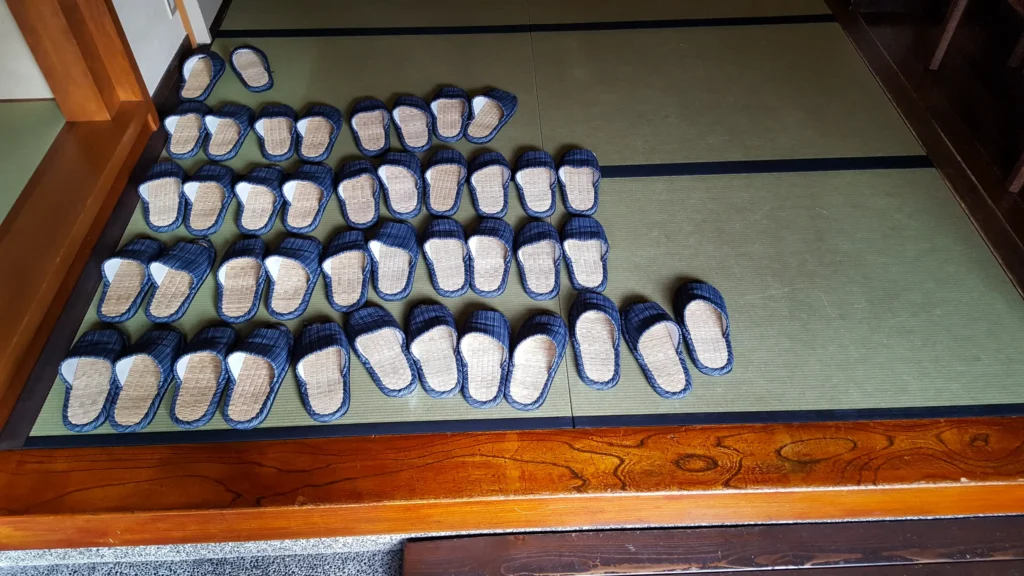
Japan has many customs that are worth knowing before your trip. It is considered polite to keep your voice down on public transport and to avoid disturbing other passengers. Shoes are removed when entering many homes and traditional accommodations, including some ryokans. It is also generally better to avoid eating while walking and to show respect when visiting temples and shrines. Always follow local instructions and pay attention to signs indicating where photography is not permitted. The most important thing is simply to be respectful and observant of the people and places around you.
Is Japan safe for travellers?
Japan is considered a very safe destination for travellers, and during our own journey we felt comfortable exploring the country. The cities felt orderly and clean, and the organisation of public transport was impressive. As with any destination, it is still sensible to use common sense, take care of your belongings and pay attention to your surroundings. For us, Japan felt like a very welcoming country to explore and was a destination where we could focus on enjoying the journey.
Would we go back to Japan?
Absolutely.
Japan is still one of the countries that has left the strongest impression on us. It was not just the famous sights that made the journey special, but the combination of all the little experiences along the way. The quiet moment inside a temple, the incredible food, the precision of the trains, the kindness of someone helping us find our way, the deer wandering through Nara and the contrast between ancient traditions and futuristic cities all became part of our story.
Our journey through Japan gave us only a small glimpse of this fascinating country, but it was enough to make us want to return. There is still so much more to discover, from cities we have not yet visited to landscapes we have not yet explored. Japan reminded us why we love travelling in the first place: because sometimes the places that feel the most unfamiliar can become the ones that stay with you the longest.
Curious about the other countries we have visited? Take a look at our destinations and discover more of the stories we could have told.